
天亮小舖
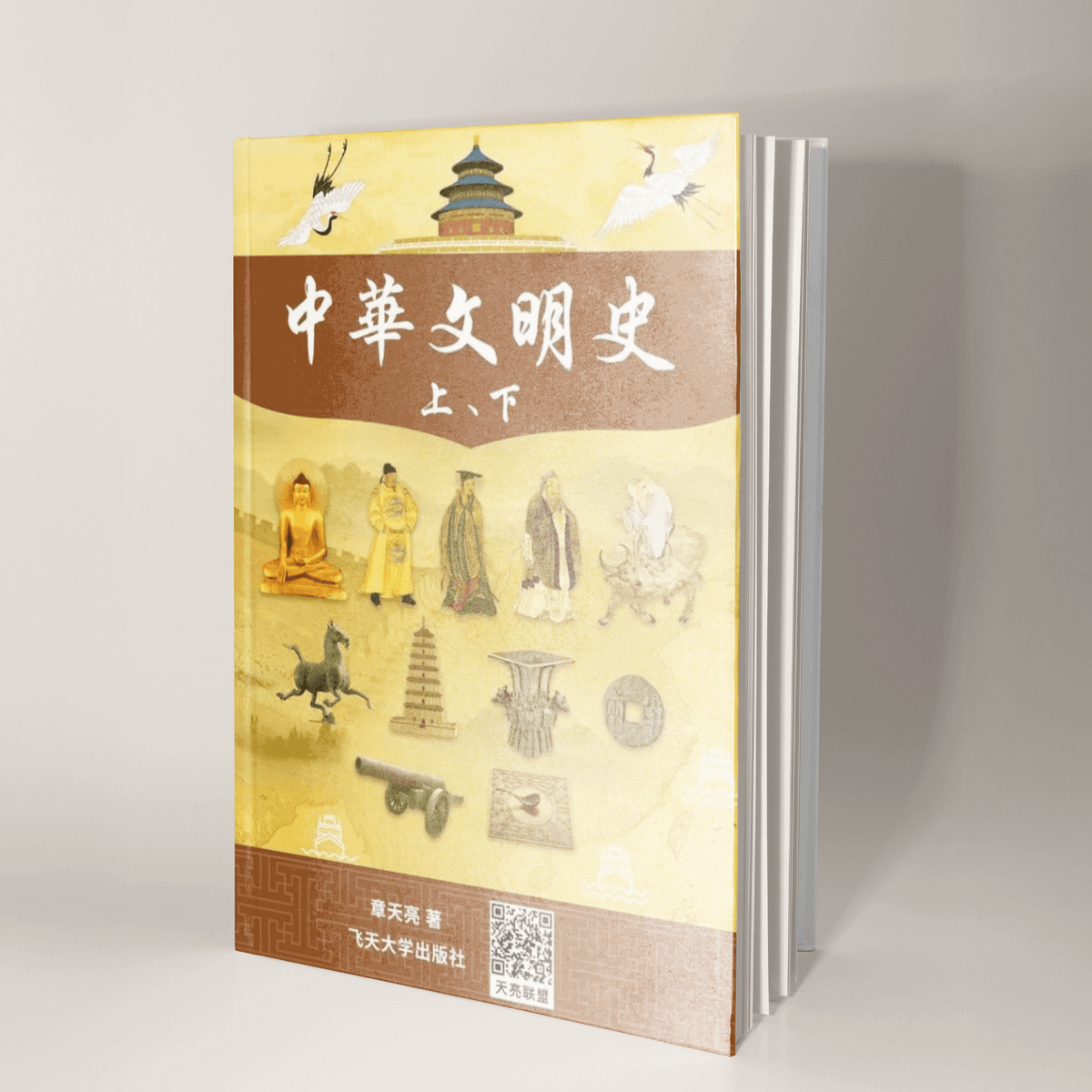
The History of Chinese Civilization (Print Edition) – English Version
In An Outline of National History, Mr. Qian Mu once expressed the view that the citizens of a nation ought to hold a certain warmth and reverence toward their own history. I deeply agree with this perspective. However, merely acquiring historical knowledge is not sufficient to understand the character of a people. One must distill from history the cultural essence that defines that nation.
This book, A History of Chinese Civilization, seeks to explore the fundamental distinctions between the Chinese nation and other peoples. This effort is by no means intended to promote narrow nationalism. I firmly believe that all nations were created by God and are meant to coexist in harmony and equality. Yet a nation is, at its core, a cultural concept. Therefore, the rejuvenation of a nation must be grounded in the revival of its unique culture. Otherwise, what we revive may become something else entirely—perhaps even another culture—and without the support of its own cultural foundation, true national renewal would remain unattainable.
With this in mind, we must return to the spiritual roots of Chinese civilization—the civilizational foundation and cultural framework established by God for this people. Such discussions, however, are rarely found in contemporary works on the history of civilizations.
During the more than seventy years since the Chinese Communist Party seized power, Chinese civilization has endured devastating damage. Fortunately, while tangible artifacts can be destroyed, the intangible spirit has continued to survive among the people. Through my practice of Buddhist cultivation, I gained a renewed and distinctive perspective on Chinese civilization. I have sought to present this perspective in an academic manner in this book, hoping to contribute, however modestly, to the reconstruction of national civilization.
The rule of the Chinese Communist Party has been described here as one of the most brutal, barbaric, and darkest periods in human history. Yet extremes give way to renewal; decline is followed by restoration. When we pass through this period, we will face the rebuilding of faith, the revival of morality, and the renaissance of culture. To publish this book in such a time of profound historical transformation is both our aspiration and our good fortune.
At the same time, I believe that the finest elements of different cultures should be shared and learned from one another. To disseminate these ideas to mainland China and to other ethnic communities, we established the nonprofit organization “Tian Liang Alliance” to raise funds for the editing, publication, and translation of this book. Throughout this process, we received generous support from many individuals across society, enabling this significant undertaking to be completed. We hereby express our sincere gratitude.